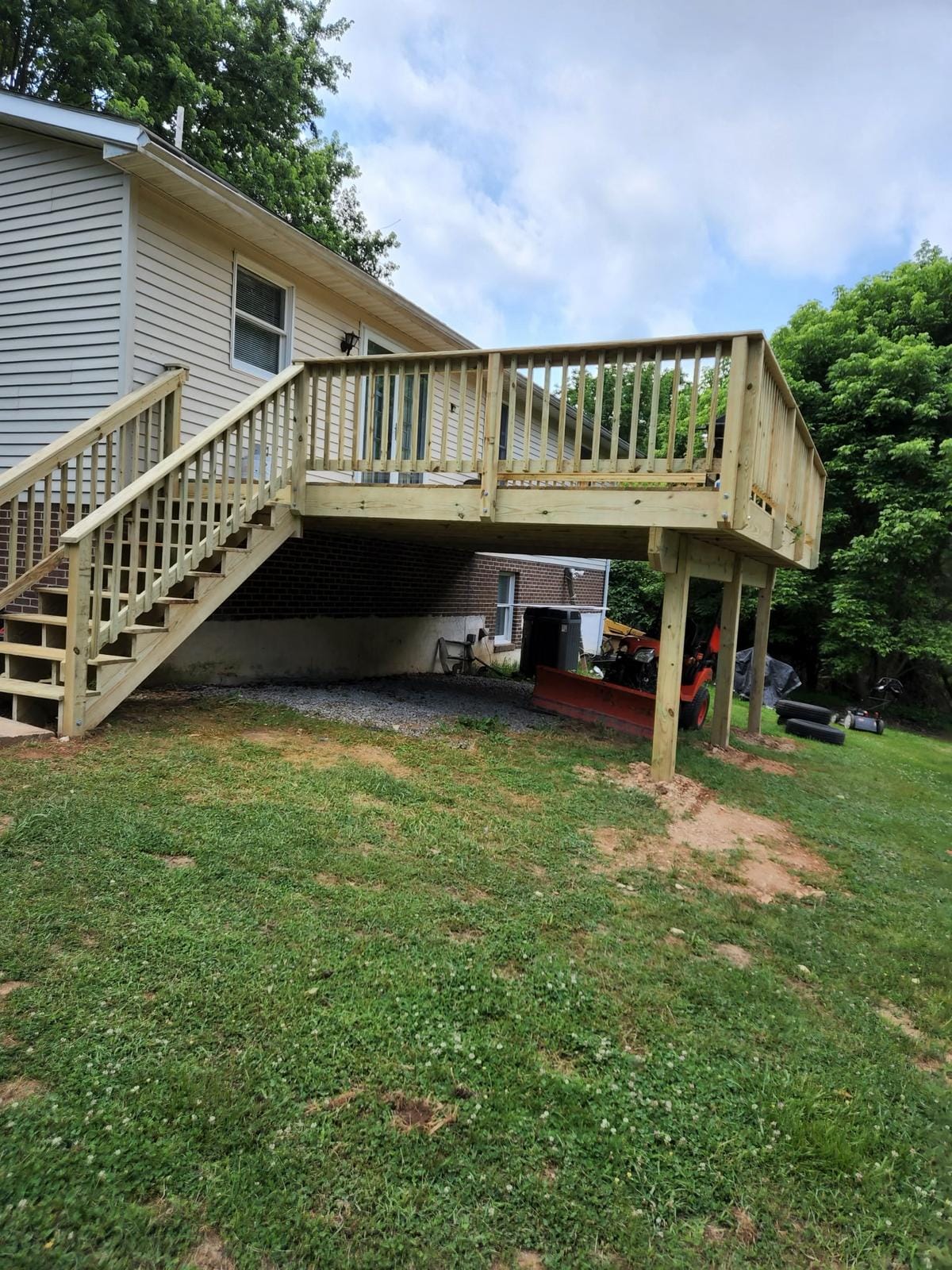
Planning a new deck in Fairfax County? Before the first footing goes in, there's paperwork — and getting it wrong can mean fines, a torn-out deck, or a headache when you sell. Here's the plain-English version of how deck permitting works in Fairfax County, and what a good contractor should be handling for you.
- Most decks in Fairfax County need a building permit — especially anything attached to the house or more than 30 inches above grade.
- You'll typically need a site plan (House Location Plat) plus construction drawings showing framing, footings, and railings.
- If you're in an HOA, that approval is separate — and usually comes first.
- A reputable contractor pulls the permit and manages inspections as part of the job.
Do you actually need a permit?
In Fairfax County, a deck is a structure — and structures generally require a building permit. In practice, you need a permit if your deck is attached to the house, or if any part of it sits more than 30 inches above grade. Because 30 inches isn't very high — barely a few steps up — the large majority of real-world decks fall on the "permit required" side of the line.
The case most likely to be exempt is a small, freestanding, ground-level deck — 30 inches or less above grade and not connected to the home. Even then, size, lot setbacks, and how close it sits to the property line can pull it back into permit territory. The safe assumption for anything you'd actually entertain on: you need a permit.
Requirements and fees change, and Fairfax County publishes the current rules through Land Development Services (LDS). Always confirm the latest specifics for your property before building — or let your contractor do it.
What the county wants to see
A deck permit application in Fairfax County generally includes three things:
A completed building permit application — the county's form describing the work and the property.
A site plan or House Location Plat — a scaled drawing of your lot showing where the deck sits and its distance from every property line, so the county can check zoning setbacks and lot coverage.
Construction drawings — showing footing size and depth, beam and joist sizing, ledger attachment, and railing details that meet code.
This is where a lot of homeowner-submitted permits stall — an incomplete plat or vague framing details trigger a request for revisions and reset the clock. A clean, complete package is the fastest path through review.
The code basics behind the paperwork
Virginia builds on the International Residential Code, and the permit exists to confirm your deck meets it. The details that matter most on a residential deck:
- Footings below the frost line. In Northern Virginia that means digging deep enough (commonly around 24–30 inches) so the ground freezing and thawing can't heave your posts.
- Guardrails on anything over 30 inches. Guards are required where the walking surface is more than 30 inches above grade, typically at a 36-inch height, with balusters spaced so a 4-inch sphere can't pass through.
- Stairs and handrails. Stairways with four or more risers need a graspable handrail, with consistent riser and tread dimensions.
- A properly flashed ledger. Where a deck attaches to the house, the ledger has to be bolted (not just nailed) and flashed to keep water out of the wall — one of the most common failure points in older decks.
The permit process ends in inspections — usually a footing inspection before concrete, a framing inspection before the decking goes down, and a final. They're not obstacles; they're a second set of eyes confirming the structure your family will stand on was built right.
Don't forget the HOA
Plenty of Fairfax County neighborhoods have a homeowners association with its own architectural review — and that approval is completely separate from the county permit. HOAs often care about materials, color, and how the deck looks from the street, and they usually want to sign off before you build. Skipping it can mean being ordered to modify or remove finished work, so it's worth handling early, in parallel with the county application.
On every Fairfax County deck we build, Skip pulls the permit as the responsible contractor, prepares the plat and drawings, builds to code, and meets the inspector at each stage. You get a deck that's legal, safe, and documented — without chasing county paperwork yourself.
He's been doing it across Northern Virginia since 1979.
Frequently asked questions
Do I need a permit to build a deck in Fairfax County?
In most cases, yes. A permit is required if the deck is attached to the house or more than 30 inches above grade, and many lower or freestanding decks still need one depending on size and setbacks. When in doubt, assume you need one and confirm with Fairfax County Land Development Services.
How high can a deck be without a permit?
A freestanding, ground-level deck 30 inches or less above grade and not attached to the house is the case most likely to be exempt — but it depends on size, location, and setbacks, so verify with the county first. Anything over 30 inches, or attached to the home, needs a permit.
What documents do I need to apply?
Typically a completed permit application, a site plan or House Location Plat showing the deck to scale with setbacks, and construction drawings covering framing, footings, and railings. As your contractor, Skip prepares and submits these for you.
How long does it take to get a deck permit?
It varies with county workload and how complete the application is, but a straightforward residential deck permit commonly takes a few weeks from submission to issuance. A clean, complete plan set is the best way to avoid review delays.
What happens if I build without a permit?
An unpermitted deck can bring stop-work orders, fines, being required to open up or remove finished work for inspection, and problems when you sell. It can also complicate an insurance claim if the structure fails. Permitting protects you — which is why Skip handles it.